What Does a Japanese Head Spa Actually Do?
4 October 2026
A Japanese head spa combines scalp cleansing and relaxation; it is not a hair-loss treatment. Learn what happens and what the service cannot do.
Most people who ask about a Japanese head spa are trying to solve two different problems at once. Their scalp may feel oily, tight, flaky, or congested, while they also want an experience that helps them slow down. A head spa can address that combination—but it should not be presented as a medical treatment for hair loss.
What a Japanese head spa is
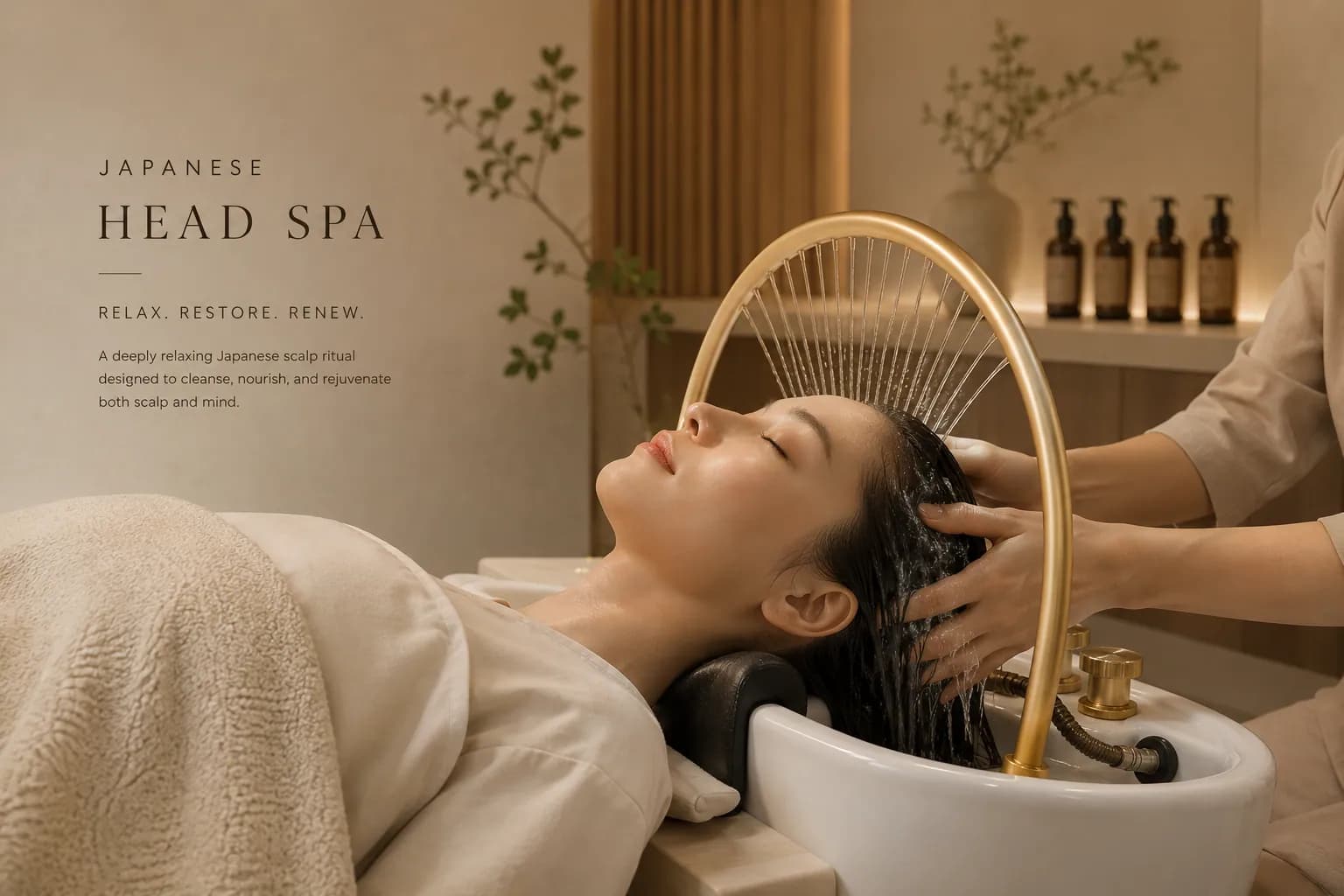
A Japanese head spa is a structured scalp-cleansing and relaxation service. At Minori, the service combines scalp analysis, cleansing, hair and scalp care, and massage. The emphasis is on removing buildup, caring for the scalp surface, and creating a restorative experience.
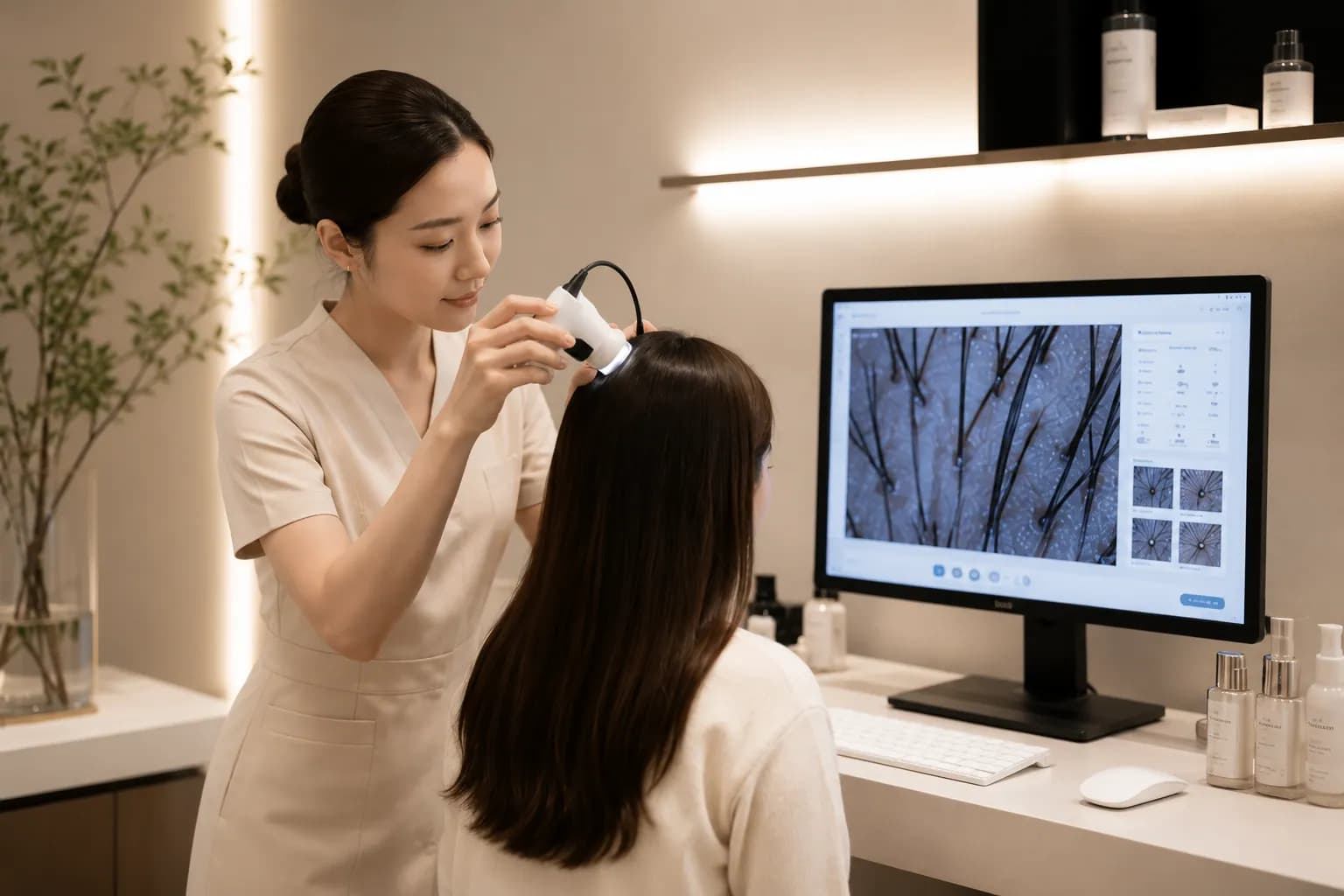
It is more focused than a standard shampoo and more scalp-centered than a facial. The appointment also gives the provider a chance to look closely at visible concerns such as oiliness, dryness, flaking, or sensitivity before recommending an appropriate service.
What it is not
A head spa is not a diagnosis or treatment for hair loss, scalp disease, or infection. It cannot determine the medical cause of shedding, and it should not replace evaluation by a qualified medical professional when symptoms are persistent, painful, sudden, or worsening.
That distinction matters because “scalp health” is often used loosely. Cleansing and massage may leave the scalp feeling fresher and more comfortable, but that is different from promising new hair growth or treating an underlying condition.
What happens during the visit
The visit begins with a conversation about how the scalp feels and what the client has noticed. A provider may look for visible oil, dry flakes, product buildup, redness, or areas that feel tight or tender. This is an observational consultation—not a medical diagnosis.
The cleansing stage is designed to remove surface oil and buildup without treating the scalp aggressively. Hair and scalp products are then selected according to what is visible and how the client describes their usual routine.
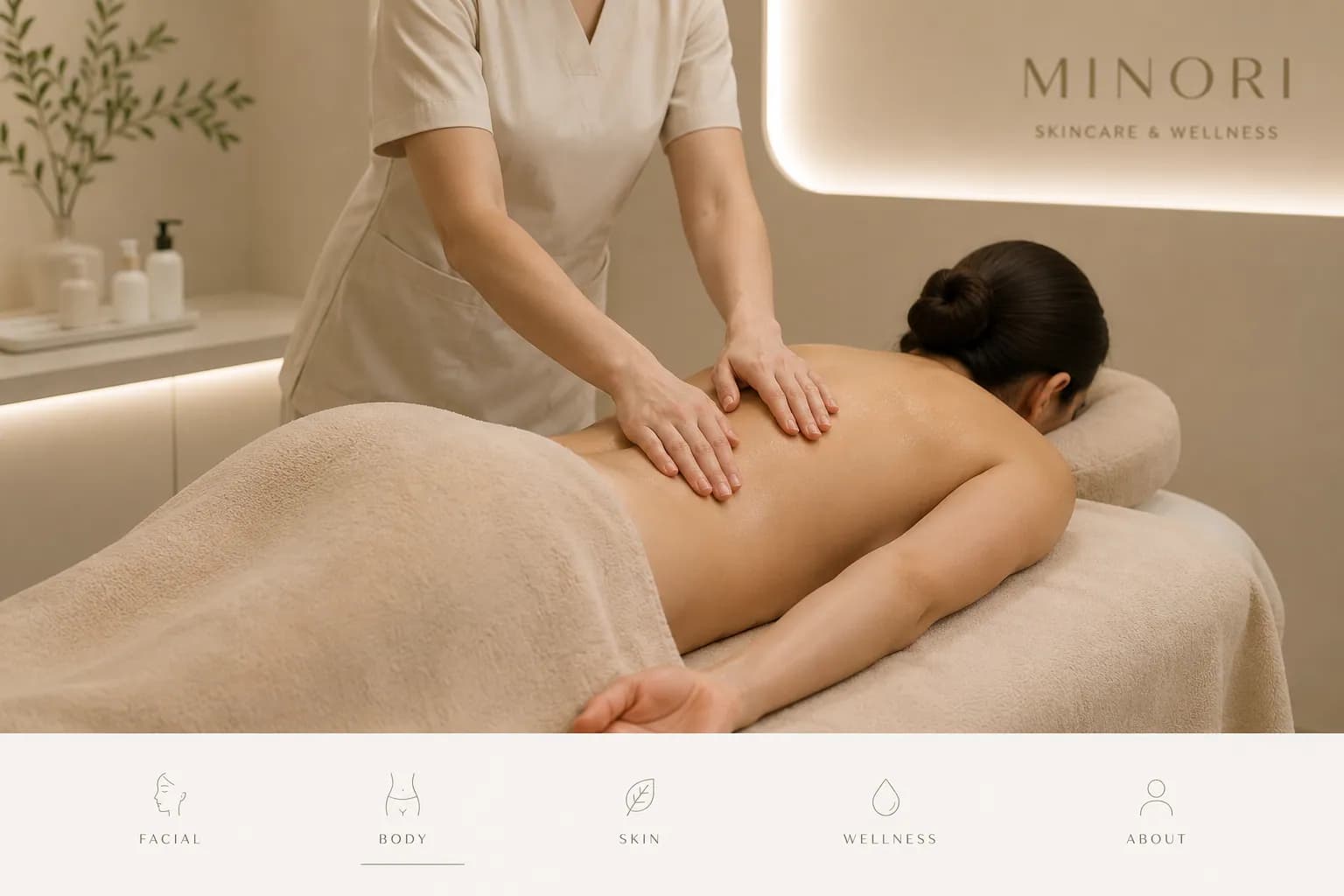
Massage is the relaxation component. It can help release the feeling of tension around the scalp, neck, and head. Many clients choose the service as much for this restorative experience as for the cleansing itself.
How it differs from other scalp services
A Japanese head spa is best understood as cleansing, care, and relaxation. A dedicated scalp consultation is the better starting point when the main goal is to understand several competing concerns before choosing a service.
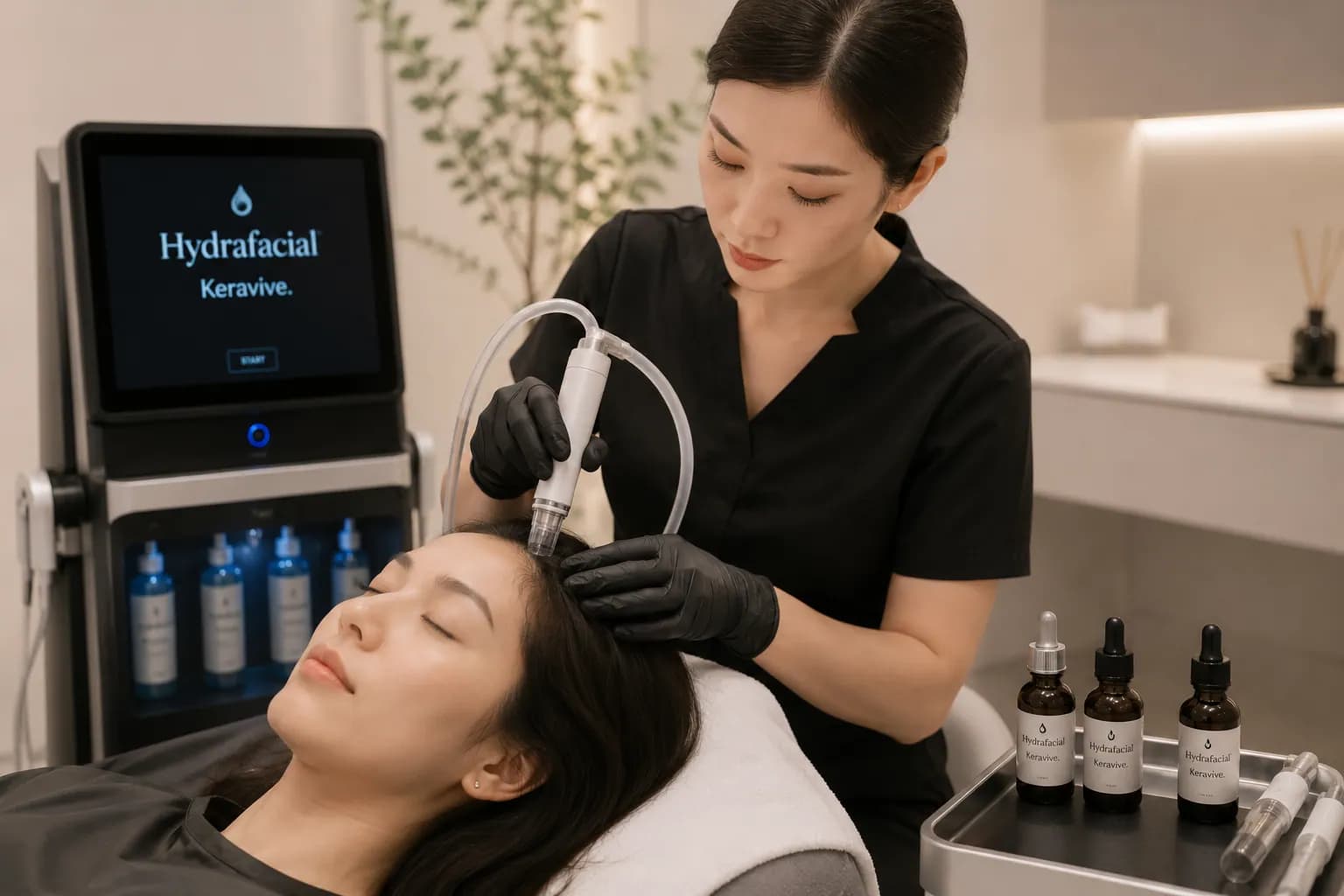
HydraFacial Keravive is a separate scalp-focused service with its own cleansing and take-home-care process. It should not be treated as another name for a Japanese head spa. The right option depends on what the scalp looks and feels like, the client's expectations, and whether any symptoms call for medical evaluation instead.
Who may enjoy it
A head spa may suit someone who experiences routine oiliness or buildup, wants a more thorough scalp-cleansing experience, or is primarily seeking relaxation. It can also be a useful first conversation for someone who is unsure which non-medical scalp service fits their goals.
It may not be appropriate over open, broken, infected, or acutely inflamed skin. Anyone with unexplained hair loss, a painful scalp, sores, or persistent symptoms should seek appropriate medical guidance rather than relying on a spa service.
One useful thing to do before booking
For one week, notice when the discomfort appears: immediately after washing, several days later, after using dry shampoo, or after a particular styling product. Bring that pattern—and a list of products used on the scalp—to the consultation. That information is more useful than trying to label the problem yourself.
It also helps to mention recent coloring, bleaching, chemical straightening, or a new scalp product. Do not leave out a reaction simply because it seems minor. The provider needs an accurate description of what happened and when it began in order to decide whether to proceed, modify the service, or recommend that you seek a different kind of assessment.
After the appointment
A head spa is intended to be a low-interruption service, but simple care can preserve the freshly cleansed feeling. Let the hair dry naturally where practical, avoid piling on strong styling products immediately afterward, and leave additional scalp scrubs or chemical hair services for another day.
The goal is not to follow an elaborate recovery protocol. It is to avoid immediately reintroducing the same buildup or irritation that the appointment was intended to relieve. If the scalp feels unusually itchy, tender, or irritated afterward, contact the provider rather than assuming that discomfort is proof the service “worked.”
Questions worth asking
Ask what the provider can actually observe, which part of the service is cleansing and which part is relaxation, and what signs would make them stop or refer you elsewhere. A careful answer should preserve the boundary between visible scalp care and medical diagnosis.
You can also ask how a Japanese head spa differs from a scalp consultation or Keravive in this clinic's menu. The best recommendation should be based on the concern in front of the provider—not on whichever service is longest or most expensive.
Choosing the right starting point
If the goal is cleansing and relaxation, a Japanese head spa may be a straightforward choice. If the concern is more complicated, start with a scalp consultation so the provider can help separate a spa-care goal from something that should be referred for medical evaluation.
Individual experiences vary. A consultation determines whether a service is appropriate, and the answer may sometimes be that a spa treatment is not the right next step.