Chemical peel for acne scars: the limits
10 August 2026
Acne marks, pitted scars and active breakouts are three separate problems, and a peel only answers one of them. An honest guide to which treatment belongs to which — and where a single treatment is not enough.
"Acne scarring" is one phrase covering at least three different problems, and most disappointing treatment plans are simply aimed at the wrong one. A brown or red mark left behind where a spot used to be is not a scar at all. A soft dip in the cheek is. An ice-pick scar — a narrow, steep tract that looks like a pore going too deep — is different again. Each responds to a different approach, and a chemical peel is only the right answer for some of them.
The easiest way to tell them apart costs nothing. Stand near a window and look at your skin from the side rather than straight on under a bathroom light. Marks that stay flat, whatever the angle, are a colour problem: pigment or lingering redness sitting in otherwise intact skin. Marks that throw a small shadow in raking light are a contour problem: tissue was lost during healing and the surface no longer sits level. Colour responds to resurfacing and to light-based work. Contour only changes when something rebuilds the floor beneath it.
Before either, the breakouts themselves have to settle. Treating scars while acne is still active is re-plastering a wall that is still leaking — every new inflamed spot has the potential to leave a fresh mark, and some resurfacing work is best avoided over skin that is actively breaking out. This is the step people most want to skip, and skipping it is why a course of anything can feel like running to stand still.
That is the job the Acne Reset Facial is built for: deep cleansing, clearing congestion, calming and rebalancing skin that is oily and reactive. It is a facial, and it is honest about being one. If your acne is deep, painful, cystic or leaving marks faster than anything can clear them, that is a medical problem rather than a facial one, and it is worth seeing a physician about prescription options. A good clinic will tell you that rather than sell you a course.
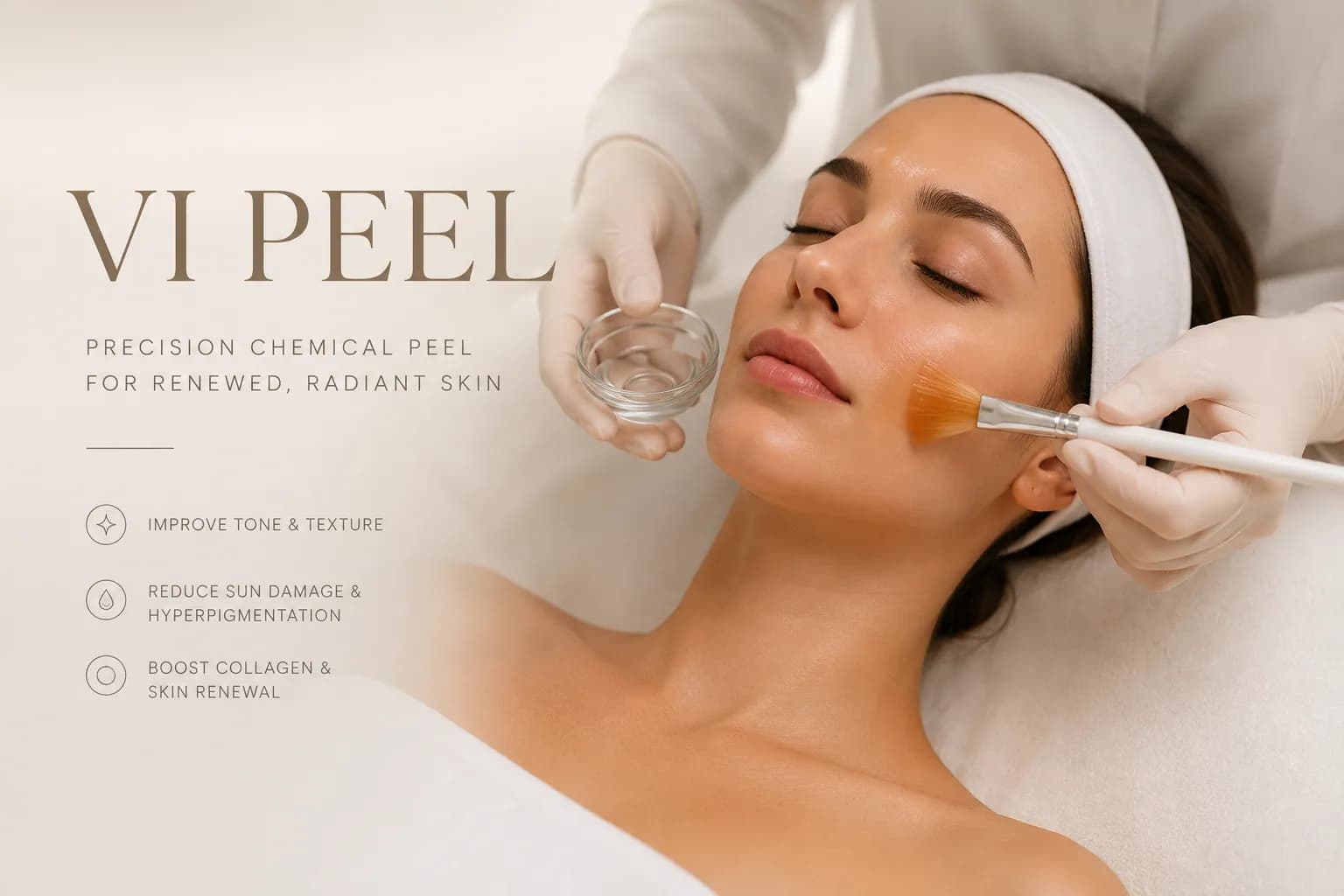
Once things are calm, the flat marks usually come first because they are the most treatable. Brown post-inflammatory pigmentation often fades on its own over many months, and sun exposure is what keeps it hanging around. A VI Peel resurfaces the upper layers over roughly a week and is well suited to this combination of dull tone, congestion and stubborn discolouration. Pico laser can be brought in for pigment that has not shifted. In deeper skin tones the calculus changes: heat and light can provoke the very pigment you are trying to remove, so conservative settings and a cautious build matter more than intensity. Redness left behind is a vascular mark rather than a pigment one and sits in a different lane again — M22 IPL targets that, not the brown.
Here is the plain limit on peels. A chemical peel resurfaces the top of the skin. It can genuinely improve tone, surface roughness, congestion and the shallow, blurred texture that acne leaves behind, and for many people that is most of the visible problem. What it cannot do is fill a divot. If tissue is missing, removing a further layer from the surface does not restore the contour — it just resurfaces a slightly lower surface. A peel is not scar revision, and any promise that a peel will erase pitted scarring should be treated with suspicion.
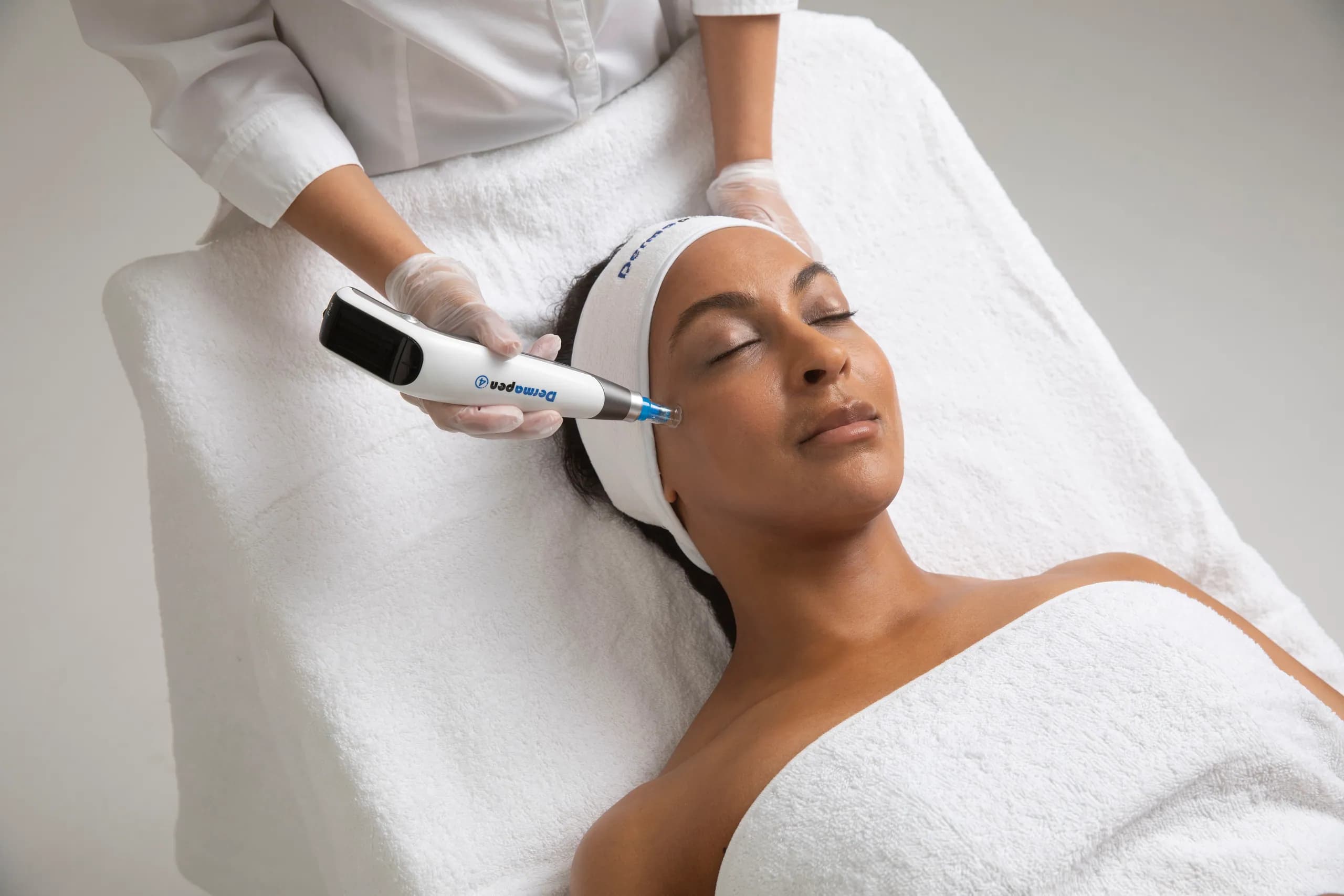
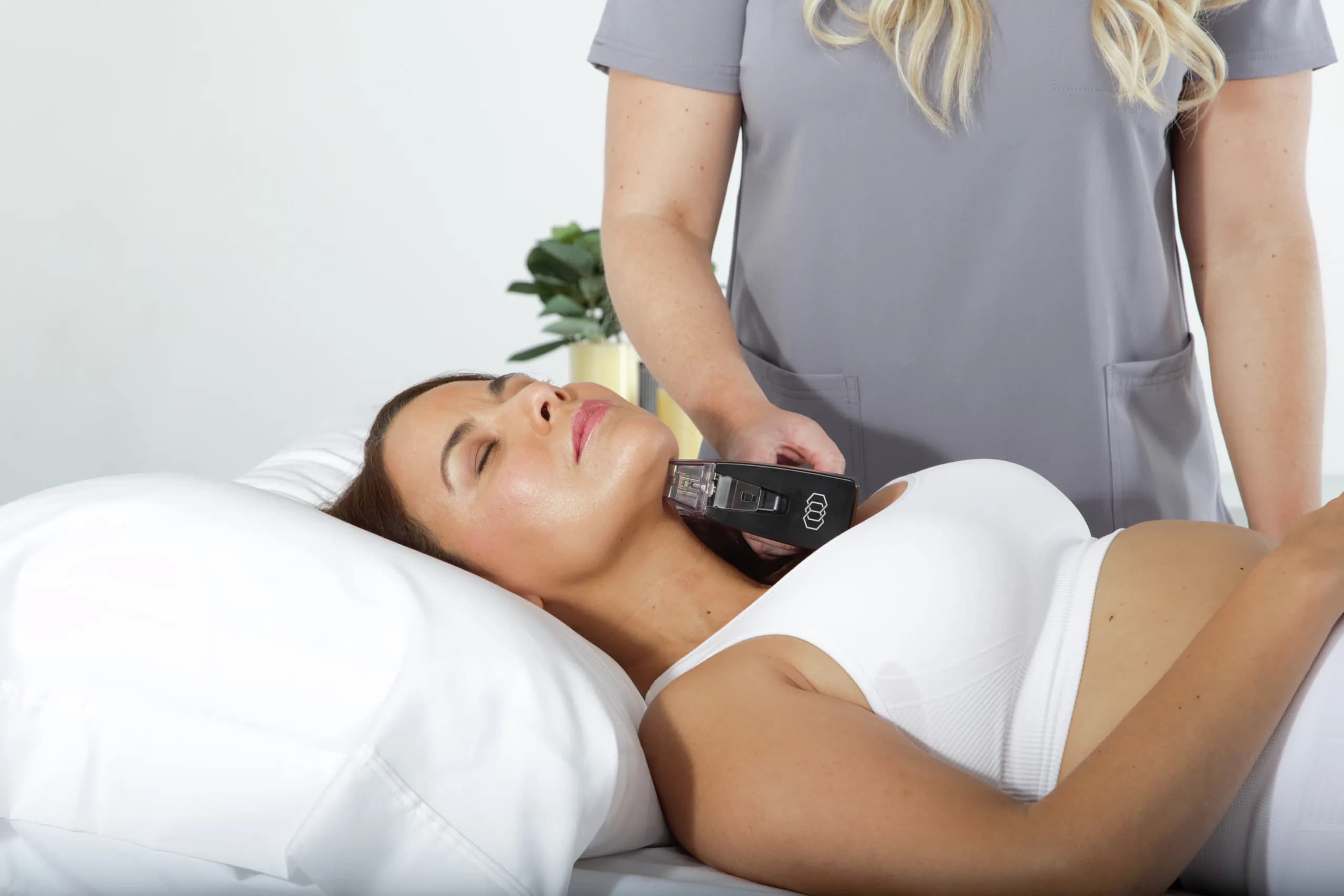
Genuine atrophic scarring — the rolling and shallow boxcar kind — needs a controlled injury deeper down and time to rebuild collagen. Dermapen 4 microneedling creates micro-channels that prompt that repair. Morpheus8 pairs microneedling with radiofrequency to work at depth, which is why it appears on the list for texture and acne scarring rather than for surface tone. Both work gradually, over a course spread across months, and both are better described as softening than as removing. Scars that catch the light less are the realistic aim.
Ice-pick scars are the honest hard case. They are narrow and deep, and needling or peeling across the surface largely passes over them — the treatment is at the wrong depth and the wrong scale. The techniques that address them specifically, such as focal high-strength acid application, subcision or punch excision, are performed in a dermatology or surgical setting. We do not offer them, and pretending otherwise would waste your money. If your scarring is predominantly ice-pick, expect a plan that combines approaches, expect it to take time, and expect part of it to happen elsewhere.
The unglamorous parts do most of the quiet work: daily sun protection, because pigment darkens with exposure faster than any peel can lighten it, and leaving spots alone, because picking converts a mark that would have faded into a scar that will not.
Results vary, skin type and scar type change the answer considerably, and no article can tell you which of the three problems you actually have. A consultation looks at your skin in proper light, works out how much is colour and how much is contour, and decides what is suitable — including, sometimes, that the right next step is not with us.